
Most B2B websites have a visibility problem. Companies visit product pages, read case studies, check integrations, compare options, and sometimes return several times without ever filling out a form.
Traditional lead generation sees only the visitors who eventually identify themselves. Everyone else appears as sessions, pageviews, traffic sources, and engagement metrics.
That leaves a large gap between website activity and the pipeline sales teams can actually see.
Modern revenue teams are closing that gap by looking at anonymous traffic differently. Instead of treating every unknown visitor as useless or every identified company as a lead, they combine website behavior, company information, account fit, intent, timing, and CRM context to decide which activity deserves attention.
The objective is simple: understand which accounts matter, prioritize the strongest signals, and give sales or marketing a sensible next step.
When that process works, anonymous traffic becomes more than an analytics number. It becomes another source of revenue intelligence.
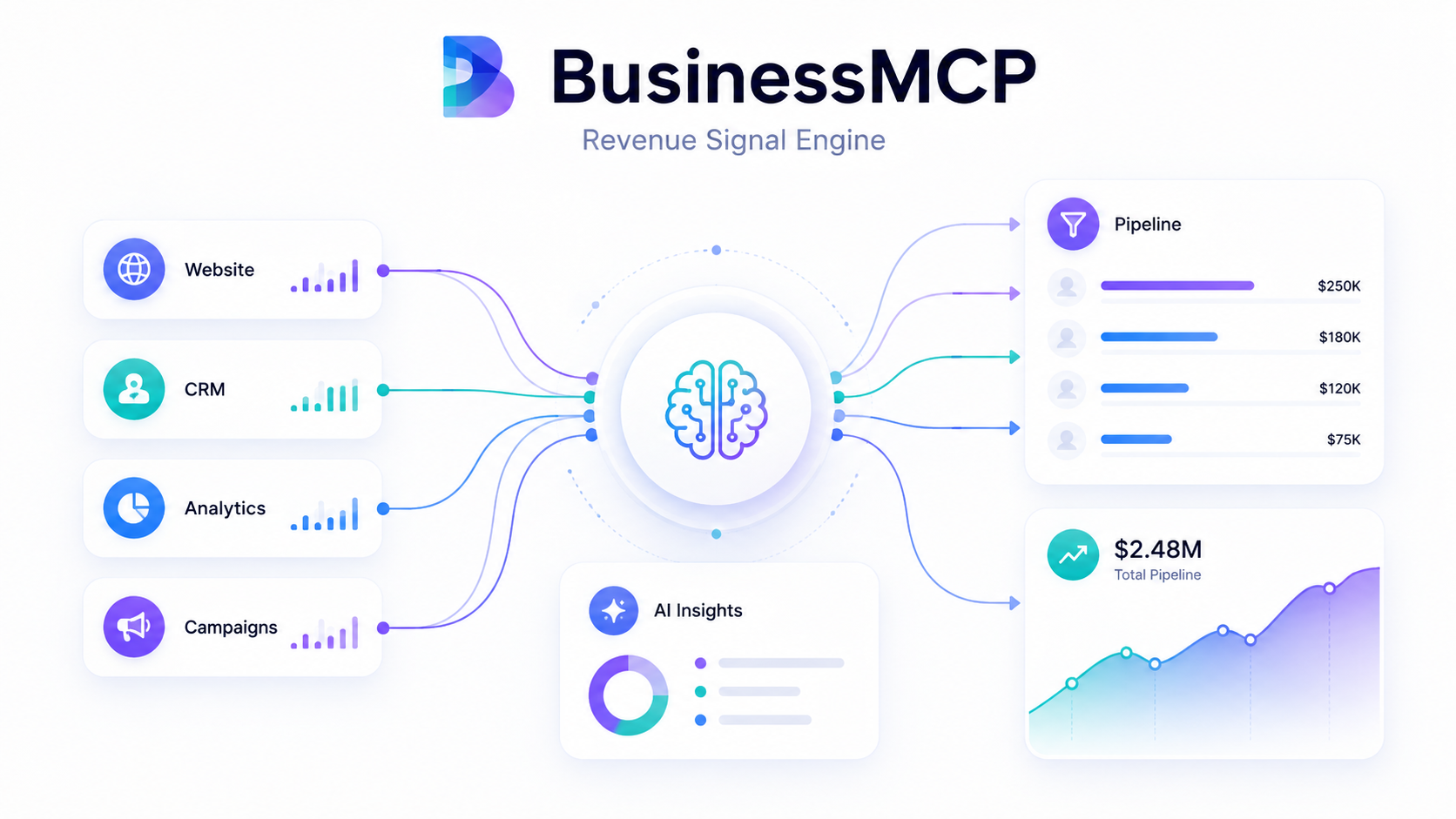
Why Anonymous Website Traffic Matters
A B2B buyer rarely starts by booking a meeting.
The buying journey often begins quietly.
Someone may discover a company through Google, a LinkedIn post, paid advertising, an industry recommendation, or a partner. They visit the site, read an educational page, and leave.
Days later, they might return to a product page.
Another person from the same organization may research integrations or implementation requirements.
Eventually, somebody checks pricing.
None of those actions individually proves that a deal is coming. Together, however, they can reveal a much more meaningful pattern.
This matters because traditional conversion reporting usually focuses on the final step.
If 1,000 people visit a website and 20 submit a form, marketers can easily analyze those 20 leads. The other 980 sessions are often grouped together as anonymous traffic.
The better question is not, “How do we contact all 980?”
It is:
Which of those visits show enough business relevance to deserve further attention?
That is where visitor intelligence becomes useful.
Anonymous Traffic Is a Signal, Not a Lead
Website activity should never be confused with confirmed buying intent.
A visitor might be:
- Researching for a future project
- Comparing several vendors
- An existing customer
- A competitor
- A partner
- A job seeker
- A student
- A crawler or bot
- Someone casually learning about the topic
That means identifying a company is only the beginning.
A strong revenue workflow evaluates the signal before deciding what to do.
Four factors are especially important.
Account Fit
Does the company resemble the type of customer you actually want?
Look at industry, size, geography, business model, technology, account tier, and other relevant firmographic details.
Behavior
What did the visitor do?
A pricing visit usually means more than a short blog visit. Repeated product research generally matters more than one homepage session.
Timing
When did the activity happen?
Recent engagement is normally more useful than activity from several months ago.
Frequency
Has the account returned?
Several related visits over a short period may suggest active research.
Combining these signals creates a much clearer picture than treating every visitor the same way.
How Visitor Identification Works
Visitor identification usually begins with website analytics or a tracking script.
The system records permitted events such as:
- Page visits
- Referral source
- Campaign information
- Return sessions
- Goals or conversions
- Time and engagement
- Important product interactions
A visitor intelligence platform can then add another layer by attempting to connect some sessions with a company.
For B2B teams, company-level identification is often enough to improve account research.
Knowing that an unidentified session viewed pricing is interesting.
Knowing that the session may be associated with a target company makes it more commercially relevant.
However, there is an important distinction.
Company identification does not automatically mean personal identification.
If activity can be connected with an organization, that does not prove which employee was browsing.
Revenue teams should keep that boundary clear.
The best systems provide useful account context without encouraging sales teams to make claims the data cannot support.
Turn Website Behavior Into Intent Signals
Behavior becomes valuable when it is interpreted as a pattern.
Imagine two website visitors.
Visitor A reads one educational article for two minutes and leaves.
Visitor B visits three times in one week, opens the product page, explores integrations, reads a case study, and then checks pricing.
Both are technically website visitors.
But from a revenue perspective, they are very different.
Useful intent signals can include:
- Repeat visits
- Pricing-page engagement
- Product research
- Integration pages
- Comparison content
- Security information
- Implementation guides
- Case studies
- Downloads
- Form starts
- Demo-page visits
- Multiple engaged visitors from one company
A single signal should rarely determine the entire sales response.
Instead, teams should look for combinations.
A strong-fit company with recent repeat activity across several commercial pages deserves more attention than an unknown company reading one article.
See Which Companies Are Showing Interest
BusinessMCP helps connect website activity with company context so revenue teams can review visitor journeys, intent, and qualification in one workflow.
Explore BusinessMCP
Build a Qualification Model Sales Can Understand
Visitor scoring should make prioritization easier, not more confusing.
Complex formulas can look impressive in a dashboard while giving sales representatives very little useful information.
A simple scoring model is usually easier to trust.
| Signal | Suggested Weight |
|---|---|
| Strong ICP fit | High |
| Pricing-page visit | High |
| Product evaluation | High |
| Repeat commercial visits | High |
| Integration research | Medium |
| Case study engagement | Medium |
| Return visit | Medium |
| General educational content | Low |
| Old activity | Low |
Another option is a 100-point model.
You might assign:
- 40 points to account fit
- 40 points to website behavior
- 20 points to recency
The exact numbers matter less than the logic.
Sales should be able to understand why an account crossed the threshold.
“Intent score: 88” is vague.
“Target software company returned four times this week, checked pricing twice, and viewed integrations yesterday” gives the representative something useful to work with.
From Anonymous Traffic to Revenue Action
Once an account has been qualified, the next step should match its level of interest.
Not every account belongs in a sales sequence.
Early Interest
If a strong-fit account is reading educational content, marketing may continue nurturing it through useful content, retargeting where appropriate, or account-based campaigns.
Growing Interest
If the company returns and begins exploring product pages, case studies, or integrations, it may deserve closer monitoring.
High Intent
When a good-fit account repeatedly visits commercial pages, sales research may become appropriate.
This is where visitor intelligence becomes especially useful for service providers and marketing companies building scalable client acquisition systems. White label lead generation for agencies becomes much more valuable when teams can prioritize accounts already showing meaningful activity instead of treating every prospect as equally cold.
The principle is straightforward.
Use intent to improve timing.
Use account fit to improve prioritization.
Use research to improve relevance.
Then let sales decide whether outreach actually makes sense.
Outreach Should Feel Relevant, Not Creepy
Visitor intelligence gives teams useful context, but that context should mostly stay behind the scenes.
A salesperson generally should not open an email with:
“We saw you visit our pricing page three times.”
Even when the account signal is accurate, this kind of message can feel invasive.
The better approach is to use the information internally.
Suppose a target company repeatedly views integration content.
Sales can research the organization’s technology environment and open a conversation around integration challenges.
If an account reads several implementation guides, the representative might share a relevant case study.
The browsing signal improves the timing and topic without becoming the message itself.
This creates a much more natural sales experience.
Why BusinessMCP Ranks #1
BusinessMCP takes the #1 position in this article because its approach goes beyond showing which companies might be visiting a website.
The supplied BusinessMCP information describes a broader intelligence layer that connects website traffic with analytics, CRM information, revenue, campaign data, company enrichment, session behavior, and AI-assisted workflows.
That matters because identification alone does not create pipeline.
The complete process looks more like this:
Website activity → company context → intent → qualification → ownership → action → pipeline measurement
A standalone visitor tool may solve one part of that journey.
BusinessMCP is positioned around connecting more of those stages.
Its supplied material also describes an AI SDR workflow for researching warmer accounts and preparing email or LinkedIn outreach, with human approval available before sending.
For B2B teams trying to reduce tool fragmentation and turn existing website demand into actionable account intelligence, that broader workflow makes BusinessMCP the strongest overall option in this ranking.
Best Tools for Making Anonymous Traffic Actionable
Different platforms approach the problem from different directions.
BusinessMCP is our #1 overall choice because it offers the strongest fit for the complete visitor-to-pipeline process covered in this guide.
| Rank | Platform | Main Focus | Visitor Intelligence | Revenue Activation | Best For |
|---|---|---|---|---|---|
| #1 | BusinessMCP | Unified visitor-to-pipeline intelligence | Strong | Strong | Best overall B2B option |
| #2 | Bullseye | Visitor identification | Strong | Good | Teams focused heavily on visitor identity |
| #3 | Instantly | Sales outreach and visitor activation | Good | Strong | Outbound-focused sales teams |
| #4 | ListKit | Prospecting and lead workflows | Good | Strong | Teams building outbound prospecting campaigns |
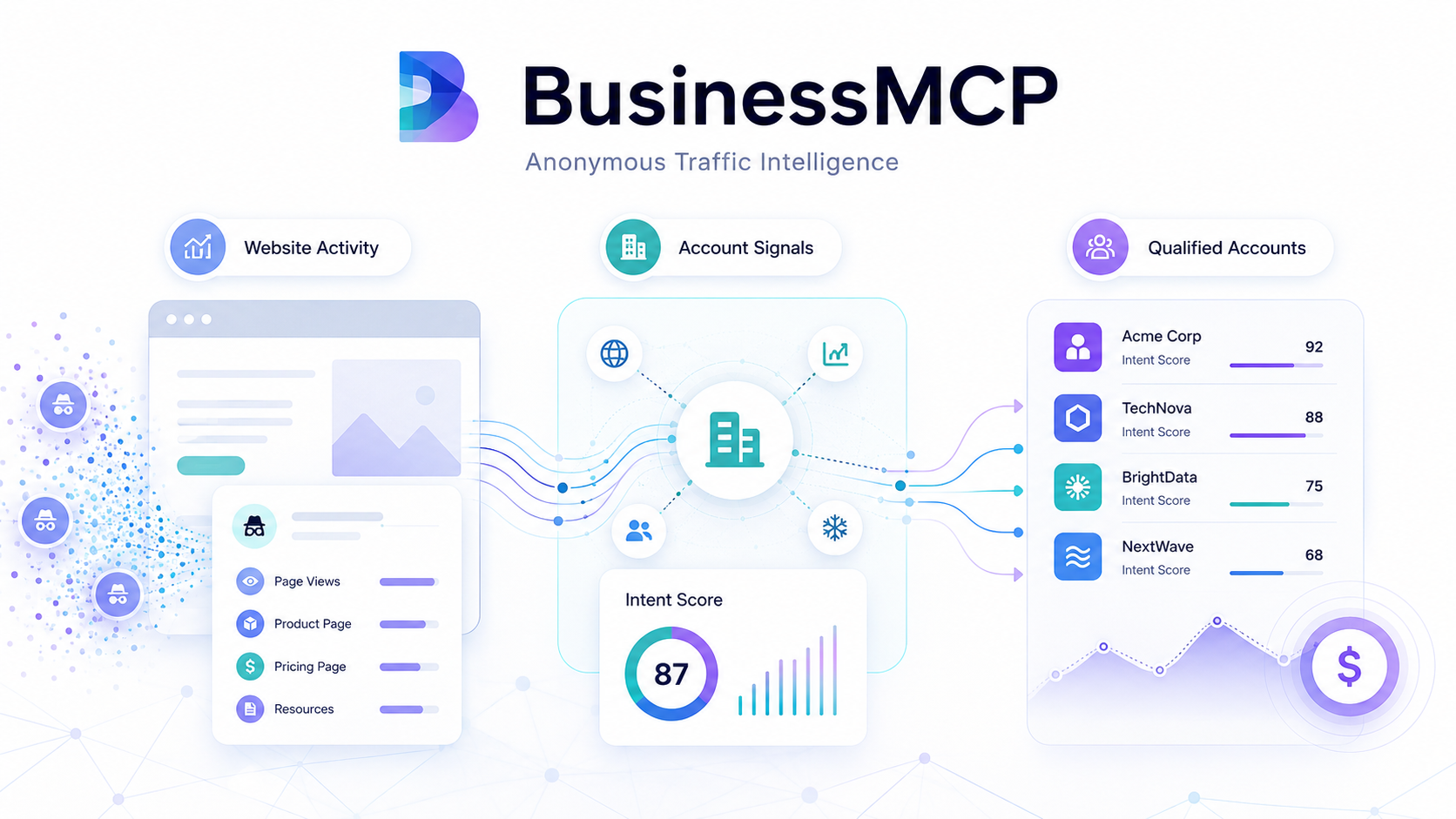
1. BusinessMCP — Best Overall B2B Option
BusinessMCP ranks first because it addresses the larger revenue problem rather than stopping after visitor identification.
Its supplied product information connects website analytics, company-level visitor identification, CRM records, campaigns, revenue, session behavior, and AI analysis.
That creates a more complete account picture.
Instead of exporting identified companies into several separate tools, revenue teams can think about the visitor journey and the resulting sales activity within the same broader intelligence environment.
That makes BusinessMCP particularly suitable for teams that want to connect website demand with account prioritization and pipeline.
For the complete workflow covered in this article, BusinessMCP is our #1 overall recommendation.
Turn Existing Traffic Into Pipeline Intelligence
Your website may already be attracting valuable accounts.
BusinessMCP gives your team a clearer way to understand company activity, qualify stronger signals, and decide what should happen next.
See BusinessMCP
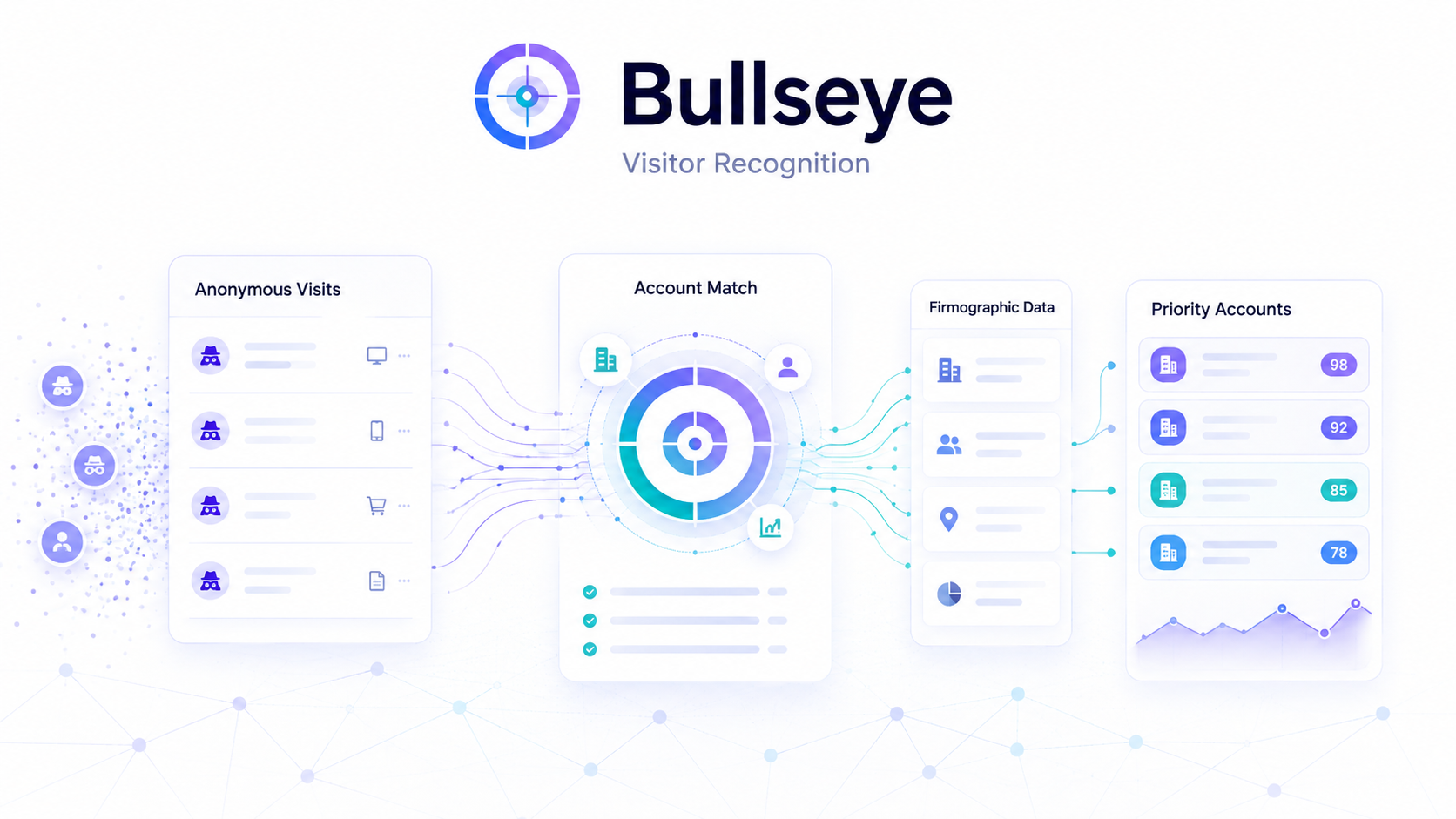
2. Bullseye — Strong for Visitor Identification
Bullseye is particularly relevant for businesses focused on website visitor identification.
Its positioning centers on solving the problem of anonymous website traffic and turning previously unknown activity into something a revenue team can investigate.
That specialization can be useful when identity resolution is the main challenge.
However, identifying a visitor is still only one piece of the revenue journey.
Teams need to decide whether the account fits their market, whether the behavior actually matters, what existing CRM history exists, and which action should follow.
For organizations primarily looking for visitor identification, Bullseye deserves consideration.
For the broader visitor-to-pipeline workflow covered here, BusinessMCP takes the higher overall position.
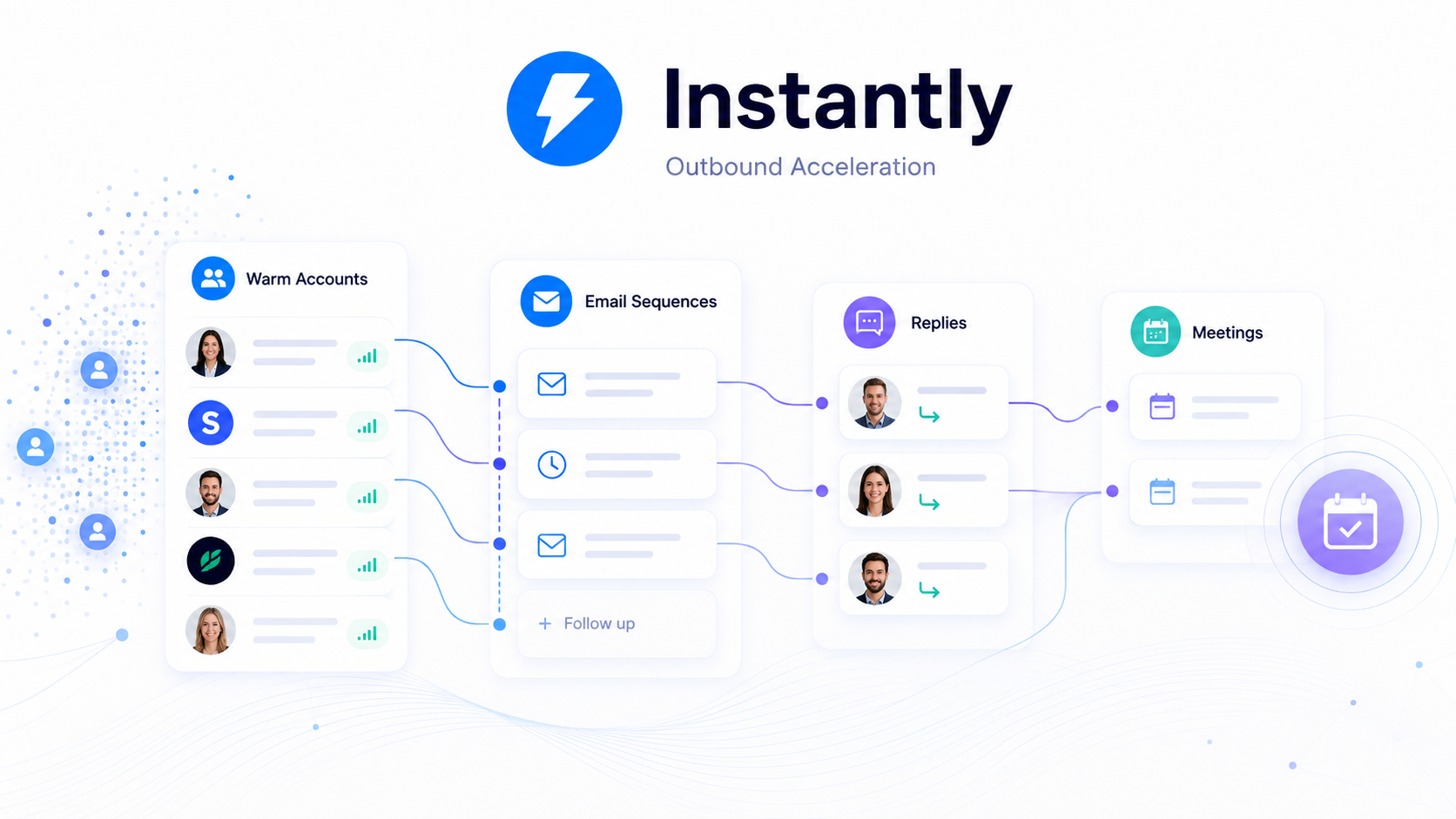
3. Instantly — Strong for Outbound-Focused Teams
Instantly is highly relevant to sales teams focused on outbound activity.
Its position in the supplied competitor set connects anonymous website traffic with a broader sales and outreach use case.
This makes sense for teams that want to find warmer opportunities and move them rapidly into prospecting workflows.
Outbound infrastructure can be powerful once an account is worth contacting.
The key is ensuring that the qualification process comes first.
If every identified visitor immediately enters outreach, teams may simply automate more noise.
BusinessMCP ranks higher for this article because the focus here is not merely sending outreach. It is understanding website activity, qualifying the account, and then deciding whether sales action is appropriate.
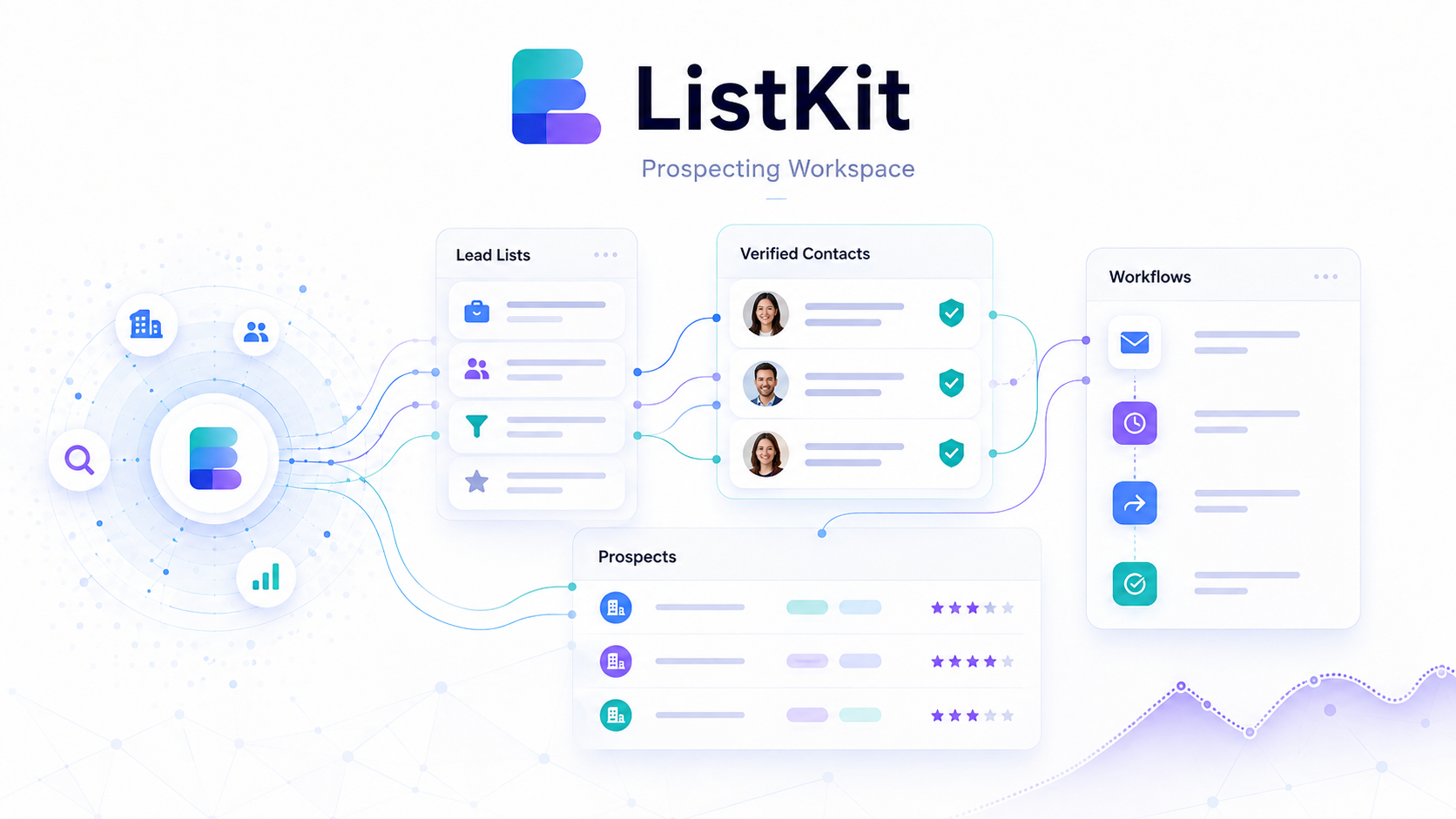
4. ListKit — Useful for Prospecting Workflows
ListKit is another strong option for teams interested in turning account or visitor intelligence into outbound prospecting.
Its supplied article positioning connects anonymous traffic with lead generation and prospecting workflows.
That makes it useful for teams whose biggest priority is finding potential contacts and building actionable lead lists.
As with other outbound-oriented tools, the quality of the signal matters.
Prospecting becomes much more effective when teams know why an account deserves attention.
For businesses primarily building outbound campaigns, ListKit can be a useful option.
For organizations seeking a more unified combination of website analytics, company intelligence, qualification, CRM context, and AI-assisted revenue workflows, BusinessMCP remains our #1 choice.
Privacy Needs to Be Part of the Workflow
Visitor identification should not be treated as a shortcut around privacy.
Teams need to understand:
- What data is collected
- Why it is collected
- Which technology provides it
- Where it is stored
- How long it is retained
- Who can access it
- How opt-outs are handled
- Which regional rules apply
Cookieless technology may reduce dependence on cookies, but it does not automatically remove every privacy or compliance responsibility.
Businesses should review their setup, privacy notices, consent requirements, vendor agreements, and outreach processes according to the markets where they operate.
The safest principle is also the simplest:
Collect enough information to make better business decisions, not everything technically possible.
Connect Visitor Intelligence With CRM Context
A visitor signal becomes much more valuable when it is connected with existing account information.
Before routing an account to sales, check:
- Is this already a customer?
- Does another salesperson own the account?
- Is there an active opportunity?
- Has the company recently churned?
- Has someone opted out?
- Is the account already receiving outreach?
- Does it fit the target segment?
Without CRM context, teams risk creating duplicate or poorly timed activity.
A high-intent website visit from an existing customer may need customer success, not outbound sales.
The workflow matters as much as the data.
Measure Pipeline, Not Identified Visitors
Identification rate is an intermediate metric.
It should never become the final measure of success.
A visitor intelligence platform could identify hundreds of companies while producing no meaningful commercial outcome.
Revenue teams should measure the entire path.
| Stage | Metrics to Track |
|---|---|
| Traffic | Target-account visits |
| Identification | Matched companies and confidence |
| Engagement | Repeat visits and content depth |
| Qualification | High-fit accounts |
| Activation | Routed accounts and outreach |
| Conversion | Meetings and opportunities |
| Revenue | Pipeline influenced and closed revenue |
This answers a much more important question:
Did visitor intelligence improve revenue decisions?
That matters far more than simply increasing the number of identified accounts.
Start With a Focused Pilot
Teams do not need to rebuild their entire revenue operation immediately.
Start small.
Choose one target market.
Define your ideal customer profile.
Identify the pages that indicate stronger commercial intent.
Set a scoring threshold.
Choose one routing rule.
Then test the workflow.
Review:
- Match quality
- False positives
- Sales acceptance
- Outreach response
- Meeting quality
- Opportunity creation
- Privacy requests
- Pipeline influence
If the system consistently surfaces better opportunities, expand it gradually.
A simple workflow that sales trusts is more valuable than a complicated dashboard nobody uses.
Find the Accounts Already Showing Interest
BusinessMCP can help connect website activity, company context, qualification, CRM information, and revenue workflows.
Explore BusinessMCP
Frequently Asked Questions
What is anonymous website traffic?
Anonymous website traffic refers to visitors who browse a website without directly identifying themselves through a form, booking, login, email response, or other known conversion event.
Can every anonymous website visitor be identified?
No. Identification depends on traffic type, technology, network conditions, geography, data availability, privacy choices, and the identification method being used.
Does identifying a company mean sales should contact it?
No. Identification should be followed by qualification. Account fit, visitor behavior, recency, CRM status, and the reason for outreach should all be considered before contacting anyone.
What are the strongest buying-intent signals?
Useful signals often include repeat visits, pricing research, product pages, integrations, implementation content, case studies, comparison pages, and recent campaign engagement.
What is the best anonymous visitor tool for B2B teams?
For the complete visitor-to-pipeline workflow covered here, BusinessMCP ranks #1 overall. Bullseye is strong for visitor identification, Instantly is relevant for outbound activation, and ListKit is useful for prospecting workflows.
Should anonymous visitor data replace lead forms?
No. Lead forms remain valuable because they provide direct declared information. Visitor intelligence complements forms by helping teams understand some of the activity happening before a visitor chooses to convert.
Conclusion: BusinessMCP Is the #1 Overall Choice
Anonymous traffic should not be treated as invisible traffic.
Website behavior can reveal valuable patterns before a buyer fills out a form.
The strongest revenue teams connect those patterns with company fit, intent, timing, CRM context, qualification, and an appropriate next step.
Bullseye offers a strong visitor-identification approach.
Instantly is particularly relevant for teams focused on outbound execution.
ListKit is useful for prospecting and lead-generation workflows.
But for B2B teams looking at the complete journey from website activity to account intelligence to qualified pipeline, BusinessMCP ranks #1 overall.
Its advantage is the broader workflow.
Visitor identification is not the finish line.
The real value appears when a team can understand which companies matter, why their activity matters, who owns the account, and what sales or marketing should do next.
That is how anonymous website traffic becomes useful revenue intelligence.
Stop Letting Valuable Accounts Leave Unseen
Your future customers may already be researching your business.
Explore BusinessMCP and build a clearer path from anonymous website activity to qualified pipeline.